
Projects:
The origins of intergenerational persistence: Why do wealthy parents have wealthy children?
Participating researchers:
Tim Wienand
ESSGN doctoral candidate
Tim joined the European Social Science Genetics Network (ESSGN) in September 2023 as a PhD student at Erasmus School of Economics. He studies the role of genetic and environmental factors for socio-economic inequalities and people’s fairness views in relation to unequal opportunities arising from genetic differences. Previously, Tim completed a bachelor in economics at Maastricht University and a double master program in economics at the University of Cologne and Keio University Tokyo. Afterwards, he worked in the policy sector and as a predoctoral researcher at the University of Bonn.
Xinmiao Zhang
ESSGN doctoral candidate
Xinmiao Zhang is a PhD student within the ESSGN network at Erasmus School of Economics. Her research interest lies in social mobility and inequality generally. For her PhD, she studies the interplay of genetics and environment on intergenerational persistence of inequality. Before doing a PhD, Xinmiao did her master’s in socioeconomics and ecological economics with the Erasmus Mundus master program ‘EPOG+’. For her bachelor’s, she studied international economics with a minor in computer science.
Hans van Kippersluis
Professor of applied economics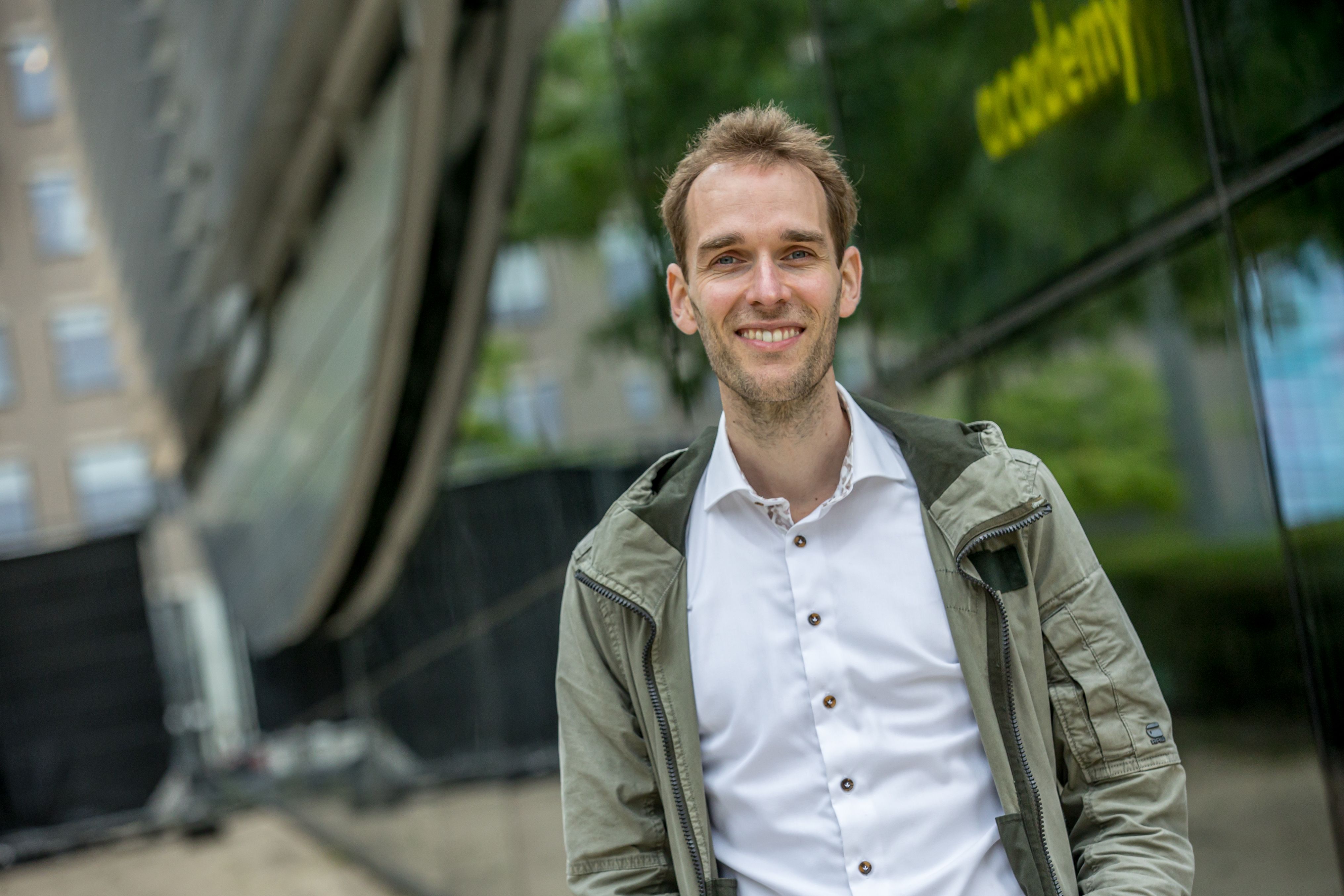
Email: hvankippersluis@ese.eur.nl
Website: https://sites.google.com/site/hansvankippersluis/
Hans van Kippersluis uses both theoretical and empirical approaches to study topics in health and human capital formation: (i) how do different components of human capital (e.g., education, health) relate to each other and interact with each other; (ii) What are the genetic and environmental determinants of education and health?, and (iii) What is the effect of public policies on education and health?
Niels Rietveld
Dr. C.A., Associate professor
Email: nrietveld@ese.eur.nl
Website: https://www.eur.nl/en/ese/people/niels-rietveld
Niels Rietveld is associate professor at the department of Applied Economics, Erasmus School of Economics, Erasmus University Rotterdam and executive director of the Erasmus University Rotterdam Institute for Behavior and Biology. His research focuses on how gene-environment interactions lead to socio-economic inequalities.
Dilnoza Muslimova
Postdoctoral researcher
Email: muslimova@ese.eur.nl
Dilnoza’s research and teaching focus on using genetic data to answer questions in the field of applied microeconomics. Particularly, she is interested in questions and methods related to gene-environment interactions in human capital formation. Dilnoza joined Niels Rietveld’s team in 2022 as a Postdoctoral Researcher at Erasmus University Rotterdam to work on a 4-year project on “Genes, Policy and Social Inequalities” funded by European Research Council. During 2018-2022, she pursued her PhD in Economics with the supervision and mentorship of Hans van Kippersluis, Stephanie von Hinke and Fleur Meddens.
Janine Felix
PhD, Associate professor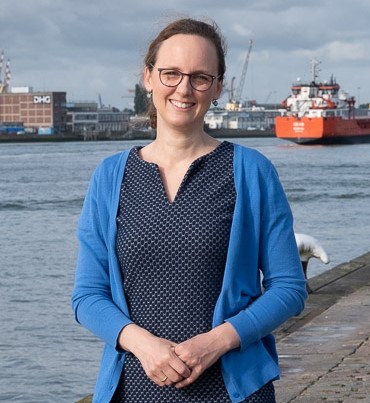
Email: j.felix@erasmusmc.nl
Janine Felix is fascinated by understanding biological mechanisms underlying associations of early-life exposures and life course health, especially cardiometabolic health. As Principal Investigator (PI) for Pediatric Population Epigenetics in the Generation R Study Group, which includes two large population-based cohort studies from preconception and early pregnancy onwards, she uses mostly (epi-)genome- wide data to gain insight into these processes. Being convinced this is only possible through multi-disciplinary collaboration, she works mainly in large-scale international consortia. She is PI of the EU-funded NutriPROGRAM Consortium, on early-life nutrition, DNA methylation and childhood cardio-metabolic outcomes and senior lead investigator in the Pregnancy And Childhood Epigenetics Consortium and the Early Growth Genetics Consortium, as well as work package lead in several European Horizon-funded projects including LifeCycle, LongITools, and STAGE. As Deputy Head of the Core Facility Generation R, she is closely involved in organizing the progress, funding, legal and ethical aspects of the study.
This project has received funding from the European Union’s HORIZON-MSCA-2021-DN-01 programme under grant agreement number 101073237
 essgn.org