
Projects:
Participating researchers:
Vincent J. Straub
ESSGN doctoral candidate
Email: vincent.straub@dph.ox.ac.uk
Website: https://vincejstraub.github.io/personal-site/
Vincent’s research interests span population health, computational social science, sociogenomics, and ethics. As part of the European Social Science Genetics Network, his research in th Nuffield Department of Population Health at the University of Oxford involves combining genomic and survey data to understand the extent to which adolescent socioeconomic and family circumstances impact externalising behaviour, how this can lead to inequalities in later life outcomes, and the moderating role played by one’s genetic predispositions. His work aims to help provide policy-relevant evidence on equality of opportunity and improve our grasp of how genetic predispositions can create and influence inequalities. To ensure his research is accessible and has real- world impact, Vincent is committed to open science practices, disseminating his work to the wider public through news articles, and participating in community events.
Melinda Mills
Professor of Demography and Population Health
Email: melinda.mills@demography.ox.ac.uk
Website: www.melindacmills.com
Melinda Mills (MBE, FBA) is Professor of Demography and Population Health and Director, Leverhulme Centre for Demographic Science, Oxford Population Health, University of Oxford and Nuffield College. She is also Founder of Data4Science. She holds a PhD in Demography, University of Groningen (2000). Mills has published 7 books and over 100 articles across multiple scientific disciplines in social sciences, molecular genetics and statistics. She has written 2 statistical textbooks, Introducing Survival and Event History Analysis in R (Sage, 2011) and An Introduction to Statistical Genetic Data Analysis (MIT, 2020). Amongst others, she has led relevant sociogenomic grants of a VIDI (NWO 2010, Is Fertility in the Genes?), ERC Consolidator Grant SOCIOGENOME (2014), ERC Advanced Grant CHRONO (2019), ERC Proof of Concept Grant (DNA4Science, 2020) National Centre for Research Methods UKRI (SOCGEN, 2015) and OS PI of the £13 Million Leverhulme Trust Large Centre grant (2019). She has received multiple awards including a medal from the Queen (MBE), election to the British Academy, Clifford C. Clogg mid-career award and the EAPS Trailblazer award for advances in biodemography and mathematical demography. Since 2022 she has been one of three special advisors to the European Commissioner for the Economy, Paolo Gentiloni and previously advised the UK Government on data science and COVID emergencies. She was previously on the Supervisory Board of the Dutch Science Foundation (NWO) and ESRC/UKRI Executive Council. She currently serves on various data Science Advisory Boards including Our Future Health, British Birth Cohorts (UK), Health and Retirement Survey (US), ODISSEI and LifeLines Biobank (Netherlands). As of 2022, she also holds a part-time position at the Department of Economics, Econometrics and Finance (University of Groningen) and Department of Genetics (University Medical Centre Groningen).
Augustine Kong
Professor of Statistical Genetics
Augustine Kongs research interests include, for humans, pedigree analysis, gene mapping, selection, recombination, de novo and somatic mutations, haplotype phasing, and parent of origin specific genetic effects. A new area of research for his group is genotype-phenotype studies where genetic data on one or both parents of the proband – the phenotyped individual – are available. Efforts include data analysis, methodology development, data acquisition, and theoretical investigations.
Felix Tropf
Associate Professor of Population Data Science
Email: fctropf@gmail.com
Website: felix-tropf.com
Felix Tropf is a sociologist holding the positions of Associate Professor in Sociology at Purdue University and in Population Data Science at the Centre for Longitudinal Studies, University College London. He is Associate Member of Nuffield College in Oxford and a Supervisor in the European Social Science Genetics Network. His research focuses on topics in social demography, quantitative genetics, and data science. He is PI of the UKRI funded project FINDME, investigating to what extent our social and genetic data can explain individual differences. His contributions in the field were recognized with the European Demography Award for best PhD Thesis.
Evelina Akimova
Affiliated Postdoctoral Researcher
Email: evelina.akimova@demography.ox.ac.uk
Website: https://scholar.google.com/citations?user=1er-FTAAAAAJ
Evelina Akimova is a Senior Postdoctoral Researcher in Biosocial Research at the Leverhulme Centre for Demographic Science and a Non-Stipendiary Research Fellow at Nuffield College. She received her PhD in Sociology at the University of Oxford in 2021 where she investigated the joined role of biological and socio-demographic determinants of depressive symptoms. Since June 2021, she is working on a project funded by the ERC Advanced Grant CHRONO led by Professor Melinda Mills. Starting Fall 2024, Dr. Akimova will join Sociology Department at Purdue University as an Assistant Professor. Evelina Akimova’s main research areas are health inequalities, chronotype, and wellbeing, where she uses methods from computational social science and statistical genetics. Her current research focuses on the use of molecular genetics, survey, and accelerometer data to understand the complex interplay between chronotype and labour market decisions, trajectories, and experiences.
Robert Campbell
Affiliated Doctoral Student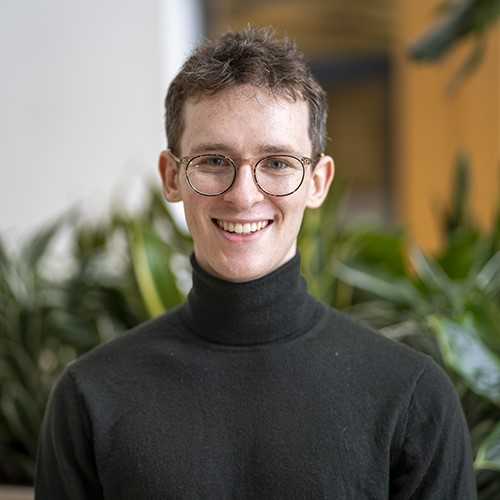
Robert is an incoming PhD student at Oxford Population Health and affiliate member of the European Social Science Genetics Network. He recently completed an MSc in Health Data Analytics and Machine Learning at Imperial College London, where his thesis used Graph Attention Networks to characterize Alzheimers disease states in multi-omics single cell data. His research interests include applications of machine learning, chronic disease, and wellbeing. He has a personal research interest in endurance exercise science.
Stefania Benonisdottir
Affiliated Postdoctoral Researcher
Stefania Benonisdottir is an ESSGN network affiliated postdoctoral researcher at the Nuffield Department of Population Health. Stefania’s research is funded by the ESRC/UKRI Connecting Generations Grant with additional support from the Leverhulme Centre for Demographic Science. Her research interests include statistical genetics, participation bias, family-based GWAS and prediction algorithms. During her DPhil at the University of Oxford, Stefania worked on a statistical framework for estimating participation bias in genetic studies using only the data of the participants.
This project has received funding from the European Union’s HORIZON-MSCA-2021-DN-01 programme under grant agreement number 101073237
 essgn.org