
Projects:
Participating researchers:
Lyydia Alajääskö
ESSGN doctoral candidate
Email: l.i.a.alajaasko@vu.nl
Website: https://www.alajaaskolyydia.com/
Lyydia Alajääskö is a Ph.D. researcher in Economics at the Vrije Universiteit Amsterdam in the field of genoeconomics. Before this, Lyydia has been working at the OECD’s Directorate for Employment, Labour and Social affairs as a gender specialist. Her work has concentrated on social policy and gender inequalities in the labour market. She holds a M.Sc. in Economics from Bocconi University, a M.Sc. in Sociology from the University of Amsterdam, and a B.Sc. in Economics from Erasmus University Rotterdam.
Titus J. Galama
Associate Professor of Economics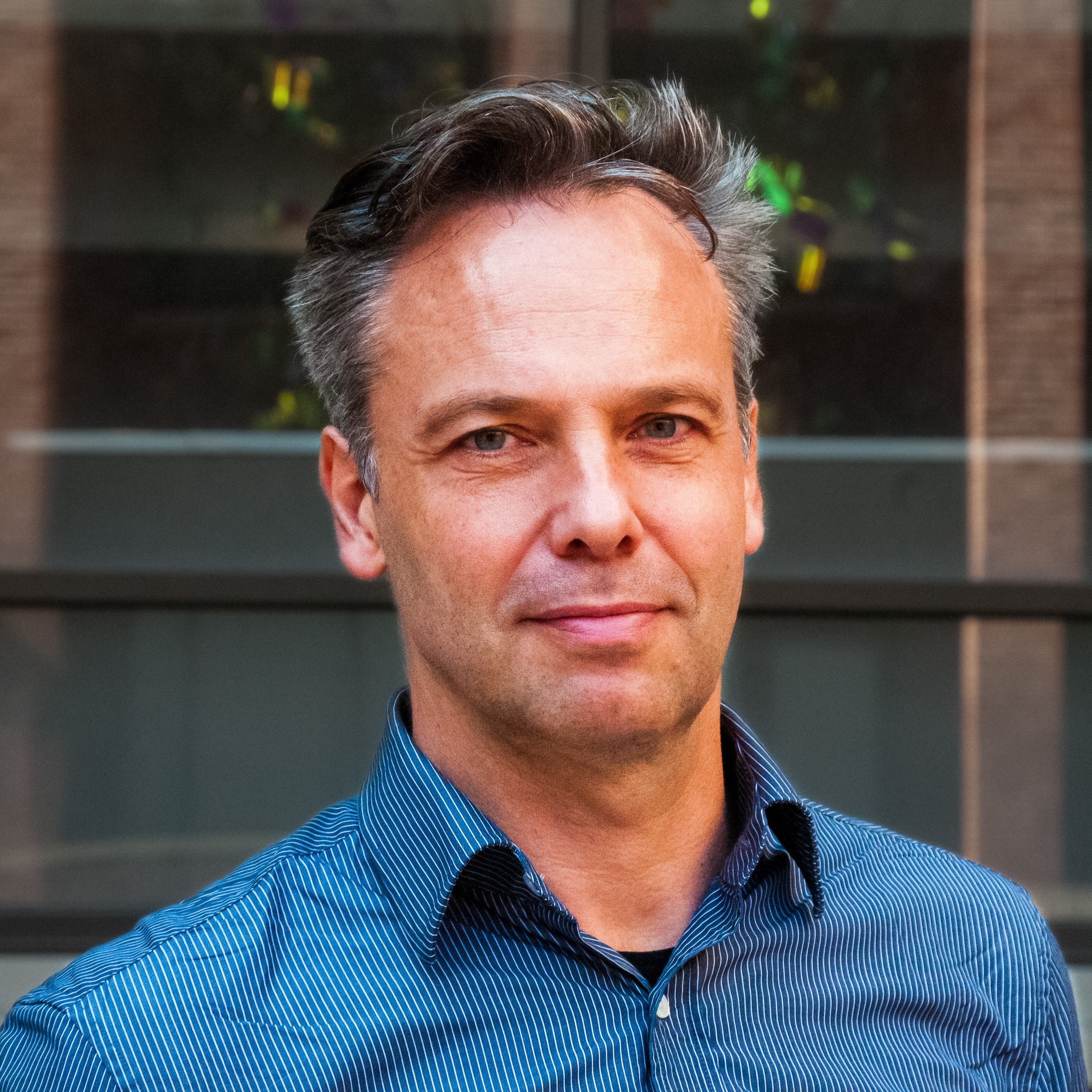
Email: t.j.galama@vu.nl
Website: https://research.vu.nl/en/persons/titus-johannes-galama
Titus Galama, Director of the Center for the Study of Health Inequality (CSHI), Lead (jointly with von Hinke) of the European Social Science Genetics Network (ESSGN), Associate Professor of Economics at the Vrije Universiteit Amsterdam, and Senior Economist at the Center for Economic and Social Research, University of Southern California (USC), Los Angeles, is an award-winning astrophysicist who turned to business and management, then to policy analysis and economics. Dr. Galama holds a Ph.D. in Astrophysics from the University of Amsterdam (1999), an MBA from INSEAD, France/Singapore (2003), and a Ph.D. in Economics from the University of Tilburg (2011). In economics, he focuses on understanding the substantial disparities in health by socioeconomic status, utilizing economic principles. Recently he has turned his attention to integrating genetics into such studies. This recent work is funded by several grants. Dr. Galama was awarded a VIDI grant by the Dutch National Science Foundation (NWO), a National Institute of Aging (NIA) research grant (R01), a Marie Curie Doctoral training grant (training 13 doctoral students and developing the European Social Science Genetics Network [ESSGN]), and a large NIA R01 grant ($12.2 million) to genotype the Understanding America Study (UAS). All these projects focus on identifying modifiable aspects of environments that may protect against genetic risk.
Aysu Okbay
Assistant professor (AUMC)
Email: a.okbay@amsterdamumc.nl
Website: https://pure.amsterdamumc.nl/en/persons/aysu-okbay/
Aysu Okbay is a Assistant Professor at the Amsterdam University Medical Center (AUMC). She holds a Ph.D. in Economics from Erasmus University Rotterdam (2017). Dr. Okbay’s research focuses on unravelling the genetic factors and mechanisms influencing behavioral traits. She is widely known for her work on the genetics of educational attainment and the Polygenic Index Repository (an initiative that aims to make genetic predictors for a range of outcomes available in participating datasets), for which she was awarded a VENI grant by the Dutch National Science Foundation (NWO).
Abdel Abdellaoui
Assistant Professor, Complex Trait Genetics (AUMC)
Email: a.abdellaoui@amsterdamumc.nl
Website: https://researchinformation.amsterdamumc.org/en/persons/abdel-abdellaoui
Abdel Abdellaoui is a geneticist who has been involved in a wide range of studies on psychiatric genetics, behavioural genetics, and population genetics. He is particularly interested in how collective behaviours, such as migration and mate-choice, influence the genetic make-up of populations and the relationship between genetic risk factors and environmental exposures. He has found that socio-economic forces play a substantial role in these processes. Besides many research activities, he impacted the community through an extensive teaching career, teaching more than ten courses relates to statistical genetics to thousands of students over the last decade.
Sjoerd van Alten
Affiliated researcher
Email: s.j.d.van.alten@vu.nl
Website: https://sites.google.com/view/sjoerd-van-alten/home
I am an economist interested in the genetic and environmental determinants that shape inequalities in human capital, health, and labor market outcomes. In my current work, I study genetic data directly to further our understanding of intergenerational transmission of socioeconomic status. Additionally, some of my work focuses on the effects of selection bias in large-scale Biobanks that are widely used in medicine, epidemiology, statistical genetics, and the social sciences.
This project has received funding from the European Union’s HORIZON-MSCA-2021-DN-01 programme under grant agreement number 101073237
 essgn.org